
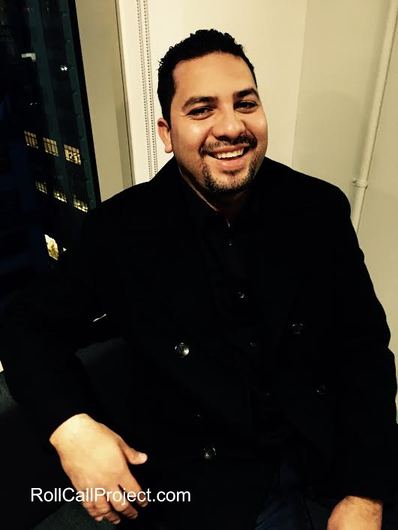
 Years in Education: 11-15
Latino Heterosexual Male High School Administrator Q: What do you have in common with your students? A: First and foremost that I am a human being. With all the flaws and insecurities. I like to relate to my students on a personal level because we've all had times in our lives when we needed someone to listen to our struggles, to give us encouragement, and to tell us everything's gonna be alright. No matter what race, ethnicity, sex, or economic background, we are ALL part of the human race. Therefore, we deserve to be treated with dignity and worth. What do I have in common with my students? The fact that we are alive, and that as we experience life itself, we come to understand that it doesn't come without its challenges. However, no matter how hard things get, if we are conscientious of our existence and the power that we posses to positively affect our lives and that of those around us, that should be reminder enough that our existence has purpose, and meaning. That without us, things would just never be the same. Q: Does it matter that students and teachers have things in common? A: Yes. There is no learning without that human connection. The way our brains are wired, we must connect with the person before we can come to understand anything they have to say. If your students don't KNOW that you care about them as human beings, they will never learn from you. People are emotional beings and sometimes we don't learn through our eyes, earns, or mouths, but with our hearts! I ask, when was the last time you learned something from someone you don't like? Jorge is a TED-Ed Innovative Educator. He is the Founder of Instructional Leadership Academy where teachers work together through peer coaching to elevate their practice and strengthen their community. Follow Jorge on Twitter @jalvarezcjusd. Photo (c) 2017 Kristin Leong
0 Comments
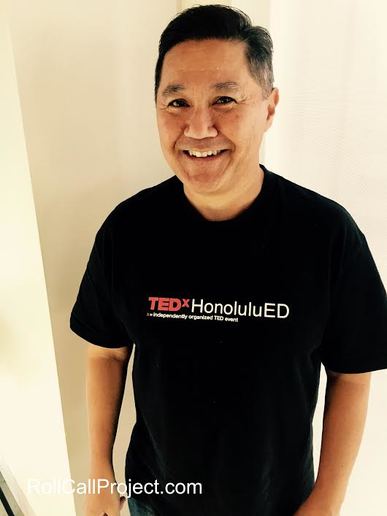 Years in Education: 20+
Asian Male Technology Integration Teacher Q: What do you have in common with your students? A: Hawaiʻi is a very multi-ethnic place where there are no "minorities." My Asian ethnicity is common, and is in common with many of our students. Having been raised here, I also have cultural commonalities and share common values with many of our students and families. I also believe that we share similar interests, pastimes, music, and even foods. The local culture here is a blend of many immigrant cultures that came to Hawaiʻi to work in the sugar plantations. It is beautiful and has a unique charm. I teach at a school for Hawaiian children. Although they are part-Hawaiian, they are a majority of other ethnicities. Still, I thought it was important to learn the culture and language. I have grown a love and passion for the Hawaiian culture! It has given me insight, empathy, and a place in the ʻohana and community. Q: Does it matter that students and teachers have things in common? A: I believe that learning is very relational, and it is helpful when students can relate to a teacher or mentor. I believe that it is also important to have role models of similar race, economic status, and orientation. There is a hope and a power in making that kind of a connection. Because Hawaiʻi is such a tiny place, there's always been that "underdog" mentality. It is important to have local role models whom students can relate to. I believe that transparency in the teaching/learning relationship (or in any relationship) is important. When students get to know you, something just might resonate and make all the difference in the world. When I was an elementary student a teacher would throw football with me during recess. That connection and relationship made a huge and lasting impact. The first time I brought my ukulele to class, I was finally able to connect with a student who often seemed disengaged. And again, learning the culture(s) of your student population can lead to more connections and empathy. Sometimes even the use of a local slang can make an impact. "Shoots! All pau. Good job!" When you have things in common, you can start to break down barriers and build community. Alan is a TED-Ed Innovative Educator. To find out how Alan is amplifying student voices in Hawaii through real-world community leadership follow him on Twitter @alantamayose. 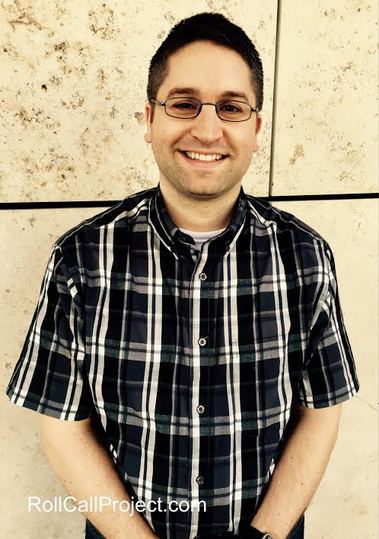 Years in Education: 11-15
Caucasian Heterosexual Male Science, Technology, Engineering, & Math Integration Elementary Teacher Q: What do you have in common with your students? A: I teach in a demographically diverse elementary school: linguistically, culturally, and economically. With 15+ different languages spoken in a given classroom and no ethnicity representing more than a third of the population, the students I teach are generally as different from each other as they are from me. That being said, I did grow up in the district where I teach and we share that experience. Most of my students enjoy learning and school. Our region is a STEM hub so students like technology. Most also love hands-on learning and science. Engineering activities are popular as well. In addition to increasing access to those STEM interests, I am able to serve as a male role model for the boys (there are very few male elementary teachers). As such, I am able to model equal access for all and showing the assertive boys the value of encouraging less assertive students. Being a very diverse population, we value and celebrate our diversity together. Q: Does it matter that students and teachers have things in common? A: Yes. As human beings, when forming relationships we tend to connect where we have things in common and build from there. I am fortunate that my school is so diverse because we all share that as a sense of community. Yet, I am also aware that it is hard for many of my students to look at me and see themselves because of differences in gender, culture, language, ethnicity, etc. With this in mind, it is important for educators to seek out as many things that they do have in common with their students as possible, e.g. sports, music, hobbies. Teachers should also take an interest in their students' unique interests and encourage them in these areas as a way to connect. Still, having students able to see themselves reflected in their role models is important. To this end, I cannot change who I am, but as a teacher I can reach out to community members and ask them to visit our school. So, yes, it matters and we need to do what we can to encourage teachers from all backgrounds to enter the profession--a diverse workforce is a stronger workforce in so many ways. In the meantime, those of us who are already teaching can invite in role models that our students can relate to and see themselves reflected in as they envision their own dreams. As adults dedicated to the future success of all of our students, we all have this in common. Douglas is a Washington State Teacher Leader and an innovator in the Maker Movement. To find out how Doug is creating hands-on, student-led opportunities for his students to connect their learning to the real world, follow him on Twitter at @DaskalosDouglas. 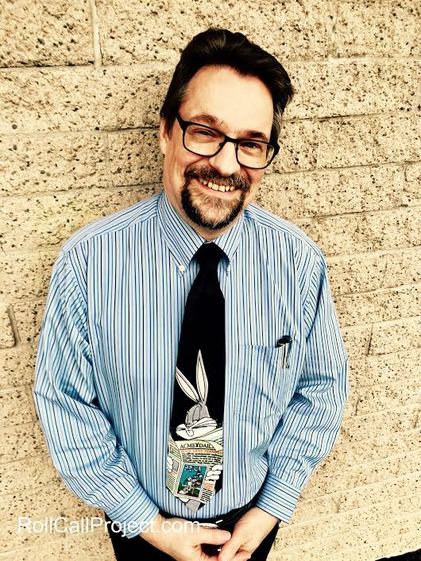 Years in Education: 2--3
White Cis-Male Middle and High School Social Studies Teacher Q: What do you have in common with your students? A: I spent nearly thirty years in the business world, mostly high tech, before I got my teaching certificate. Although I am old enough to be a grandfather to my students, I can almost always find commonalities with them. We can talk about favorite books and favorite authors, I can talk sports, or cars, or music or theater. Because I am an older teacher, my life experiences are broad and deep. If a student has knowledge about a subject, I can usually dredge something up that relates. We are all humans. We share life experiences. I know love and loss. I can relate to the tragedies and comedies that my students are going through, as they journey up and down the emotional scale. That 8th grader going through an emotional breakup with their partner? We could laugh that off as just a silly Romeo and Juliet romance. But they are experiencing it, and it is very real to them in all its horribleness, and it’s exacerbated by their fluctuating hormone levels. A student identifies as a member of the Queer communities? I can relate: one of my own children came out as gay, then trans, as a teenager. Another is severely depressed? Been there, done that, got the T-shirt: I literally kicked down locked and bolted doors to save my kid who attempted suicide so many times I lost count. This one feels isolated because they aren’t part of the in-crowd? So was I. It’s called life, and we all journey through it without a guidebook. Our students are having to do it without the maturity of an adult and the wisdom of years to help them. No, I don’t listen to all of the same kinds of music my students love, but I listen to enough that I’ve heard or seen some of their favorites. I keep up on YA literature because it interests me and I personally know many local YA authors (the advantage of being married to one, attending conferences with her, and having common friends!). As an older, white, cis male I’ve not had to personally deal with the many issues surrounding racism, sexism, queer and religious intolerance, etc., but, I have friends from all kinds of backgrounds who do so on a daily basis. I can empathize with almost anyone. One of my greatest strengths as a teacher, is building rapport with my students, and I work constantly to continually build a safe community in my classroom. The only way I can do that is to accept my students where they are, wherever that might be, and to listen to their stories. Each student’s voice is essential. Knowing their voice is heard is even more important – and listening more than talking, my friends, is what each of us can do. Q: Does it matter that students and teachers have things in common? A: It’s helpful. We certainly don’t have the same experiences that our students have, nor can we ever. However, by listening more than we talk, and by validating their experiences and assuring them that they aren’t alone, more than makes up for the facts that we are not their age, not their race, not their orientation, or gender, or immigration status, or religion, nor all the other factors that make up their story. In addition to being a teacher, Andrew is also a pirate. Follow him on Twitter @andrewlbond. 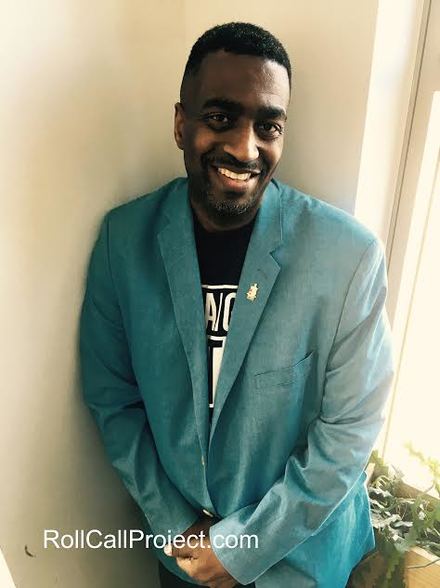 Years in Education: 11-15
African-American Male Heterosexual First in Family to Graduate From College 5th Grade Teacher Q: What do you have in common with your students? A: It’s rare to see a male teacher in an elementary classroom, and African-American men are even rarer. In my school of more than 60 employees, only five are male. I believe this has an impact on our male students – especially those without positive male role models in their homes. But it also provides men like me with a unique opportunity to reach out to these students and inspire them to do great things both in the classroom and in the community. We have the power and responsibility to prevent an achievement gap before it begins. While some kids dream of becoming a teacher as they grow up, I didn’t figure out my calling until I was in my 20s. As a student, I was every teacher’s worst nightmare. I was constantly in trouble and failed 4th, 7th, 8th and 9th grades before being forced out of school at the age of 16. It was December of my 2nd year in the 9th grade when the school counselor called me to the office to tell me it was best that I pursue a GED and learn a trade. I plead my case and asked for a second chance, but the decision was made, and my time as a student was over. Within a year, I received my G.E.D., and I spent the next decade bouncing from job to job and living paycheck to paycheck. In 1998, my mom passed away after a long bout with breast cancer, and I struggled with her loss for months. Just when things started to get better, my dad passed away as well. Losing both parents within six months of each other was the toughest stretch in my life. I did a lot of self-reflecting and soul-searching during that period, and in the fall of 1999, I enrolled in Livingstone College to major in music with the mindset that I was going to make a difference. To fulfill my college community service requirements, I began volunteering at a local elementary school. Not much had changed since I was in school – students were given worksheets, the teacher sat at their desk, and students with behavior issues were allowed to sleep in class or were removed from the environment completely. I was disturbed by what I observed, and began volunteering and mentoring in that classroom. The next semester, I changed my major to elementary education. I received a full academic scholarship, and graduated with a bachelor’s degree. in Elementary Education in 2003. As a teacher, my main goal is to give my students a learning experience radically different from my own – which is exactly what I’m doing today. My classroom, better known as Johnsonville, really isn’t a classroom at all. It’s a collaborative community – a real-world simulation of adulthood where kids come to work and play as they learn about personal finance, government, and global affairs. In Johnsonville, there are no lectures. I integrate technology and problem-based learning to capture the attention of even the most disengaged students. Just like in the real world, my students show what they can do through projects, teamwork, and research. Is it working? North Carolina state testing shows that my problem-based learning model improves student scores. My students consistently score higher than other science classes in my district. At the end of the 2016 school year, my fifth-grade students scored an average of 85 percent on the state science exam, while my school as a whole scored 58 percent. Q: Does it matter that students and teachers have things in common? A: Yes. Anthony is the 2016-2017 Rowan-Salisbury Teacher of the Year and is a TED-Ed Innovative Educator. To follow the adventures in learning happening in his real-world simulation classroom, visit johnsonvillelearningnetwork.com and follow Anthony on Twitter @a_p_johnson. 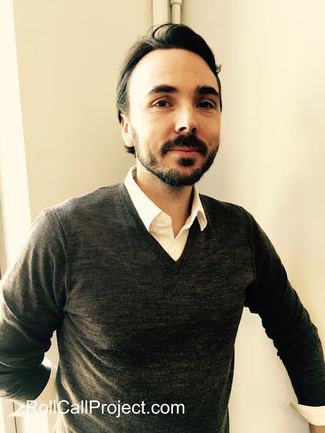 Years in Education: 11-15
Caucasian Male Heterosexual First in Family to Graduate From College Library Media, Technology, and Language Arts Teacher Q: What do you have in common with your students? A: As a student growing up on the North Shore of Boston, MA, I managed to progress through school with a minimum of interest and engagement. Neither sufficiently advanced to be flagged as “gifted”, nor challenged enough to require individualized support, I floated straight through that bucolic center passage of mediocrity, serenely disengaged from what was transpiring around me. When the time came to acknowledge the oncoming reality of high school graduation, I had no ambitions to attend college. I had no understanding of what college was, or how it worked. While my mother had returned to school as an adult to earn her Associate’s Degree, no one in my immediate or extended family had ever graduated with a four-year degree. I simply couldn’t imagine a scenario in which I was a college student because I had no conceptual framework, no schema, for what that even looked like. Faced with this uncertainty, I fell into assuming that I, too, would graduate high school and find employment somewhere, doing something. And this would no doubt have been the case were it not for a series of serendipitous events that directed me, last minute, to attend college. In the years since, I’ve become the first member of my family to graduate college with a four-year degree. I later spent time traveling and teaching in Beijing and India and discovered that I have a heart for education. Returning to school in 2004, I earned my Master’s degree in education and have spent the past decade focused on creating an environment that encourages students to assume greater agency in their own education. I mention this because I honestly believe that my experiences as a middling and disinterested student has provided me with a keen sense of empathy for similar students in my classes and in our community. How can I help to build learning opportunities that encourage engagement and place students in the driver’s seat of their own education? How can I help spark the interest of a student who is struggling to find their place and create a stronger sense of purpose and agency in their school experience? Q: Does it matter that sudents and teachers have things in common? A: I think it's essential for students and teachers to find common ground. Teaching is about relationships, and finding shared interests, experiences, and realities help to forge and develop relationships and strengthen empathy between everyone involved. Teachers need to understand and relate to the experiences of their students. Place themselves in the shoes - and the seats! - of their students in order to build relevant lessons that spark engagement. Conversely, I believe it’s equally important for students to see that the circle of their experiences overlaps with that of their teachers. That there is a commonality, a shared commitment to growth and learning on both sides of the relationship. I read somewhere that ‘Teaching is relational, not transactional’, and that, I believe, sums it up quite nicely! David is a 2017 TED-Ed Innovative Educator. He is currently connecting students across communiites to work together to document our collective history. Follow David on Twitter @designsaunders. 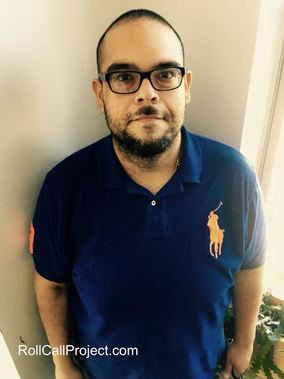 Years in Education: 16-20
Latino Heterosexual Male Former High School History Teacher District Technology Facilitator Q: What do you have in common with your students? A: I grew up in Union City, New Jersey where I have worked in schools for the last 16 years. I started as a classroom history teacher and eventually became a tech facilitator for the District. Union City is a predominantly Latino community. There are many things I share with my students like food, language, folk lore, idioms and so on, due to the fact that I'm Latino myself and also grew up in this same community. Being that Union City is an urban community, we also share some common evils. When I was a student, I also experienced poverty, drugs, gangs and other negative things. I still clearly remember walking to and from school and seeing these evils in the streets and corners. I can relate to students' peer pressures, family pressures, dealing with poverty, and dreaming of one day getting out. I can sit with troubled kids and talk about some of the things they see on their end. This really opens up my relationships with my students because I'm not seen as an outsider or another un-relateable adult. I can also relate to their hopes, dreams, motivation and needs. I can plant seeds of bigger dreams, bigger aspirations, and life outside of Union City. I always talk about the benefits of living in our community as well. I try to show them that they have the opportunity of an academic education, but they also a street smarts that they learned from hard knock lessons. Q: Does it matter that students and teachers have things in common? A: Having common ground allows for teacher and students to jump into getting down to work quicker. No need for a long transition phase or a “getting to know” sessions. Being from the same community allows me to come to class with an understanding of what our students experience and see every day. This allows for a more pleasant work flow and space. Walls are instantly tore down when teacher and students share common things. Marcos is a 2017 TED-Ed Innovative Educator. He is a leader in the makerspace movement. To learn more about what Marcos is doing to facilitate hands-on student creativity and leadership, follow him on Twitter @mrnavas. 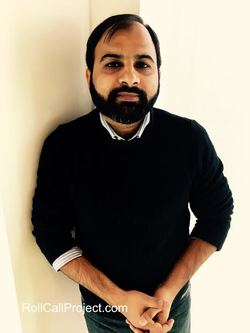 Years in Education: 7-10
Pakistani Heterosexual Male Urdu Language, Culture of Pakistan, Sociology Teacher Q: What do you have in common with your students? A: When I start teaching a new group of students I dedicate the first session for ice breaking activities. In the introductions, when I get an answer I respond to that and have some little chat about it. For example, when talking about last book we have read, I will engage in discussion about the storyline or characters of the book and compare it with a character I like, or story I have read. So I intentionally try to create commonalities with my students. Once I was in the girls school in my maternal village and I wanted to discuss with them few important things but students were not opening up. So I started sharing with them that my mother was born in this village and she could only go up to grade 5 because the school in the village did not offer higher classes and her parent could not afford to send my mother to the nearby city. This created a commonality which was needed. Another important thing for finding the common things is that I always consider that the students sitting in front of me are human beings like myself and if for some reason they are not performing well in class I always keep that in mind that they might be facing a challenge in life outside class. Students are not learning machines. Q: Does it matter that students and teachers have things in common? A: Finding common grounds is perhaps the start of journey which teachers and students embark on. I have seen it in many cases that if students and teachers do not have things in common then the students will not open up. If the wall of unfamiliarity is taken down between the two parties then learning expedites. In Pakistan, I was dealing with a group of young learners who were particularly fond of the sport of cricket. I was trying very hard but they were not responding. When I found out that they all love cricket and I myself was a cricket player, then I started bringing examples from cricketing world. I started using names of cricket players in the lessons and brought in cricketing scenarios and it worked so well. From that point onward the students always waited for my class. Once in America I was teaching Urdu as a foreign language and the class was not very lively. I learned a game 'Simon says...' which my students knew and made a translated version of it in the Urdu language and the barrier broke. Everybody loved it. So yes, it matters. Umar is a 2017 TED-Ed Innovative Educator. He is currently working with the University of California, Berkeley's study abroad program in Pakistan. 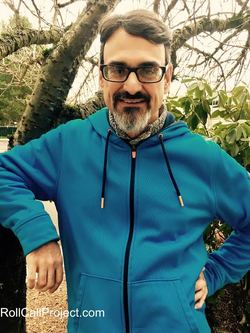 Years in education: 20+
Cuban-American Heterosexual Male First in family to graduate from college Middle School Science & Technology Teacher Q: What do you have in common with your students? A: When I started teaching in South Central Los Angeles back in 1991, I was a young Hispanic heterosexual male in a female dominated profession. Frankly, that never was an issue to me because I was raised by my mother. My father wasn't present so I was used to being around women. Teaching in L.A. was within my comfort zone because my school was 85% Hispanic and almost 15% African American. The staff I worked with in L.A. was quite diverse too. We had a Cuban-American teacher (me), a couple of Mexican-American teachers, a Panamanian-American teacher, several African American teachers, and a few Caucasian teachers! And three teachers on staff were homosexual. A great team to work with. I started teaching mixed classes of beginning English speakers to English-Only speakers. Because I could speak Spanish I moved to teaching full classes of beginning English speakers so my classes were made up of 100% Hispanic kids. I had Mexican, Salvadoran, Nicaraguan, and Guatemalen students! Back then California had a full bilingual program so that kids could learn in their native language while increasing their English learning as they progressed instead of hearing English all the time and learning what they could. When my wife and I moved to Washington, I left my Hispanic kids and moved to a rural town teaching kids that were predominantly Caucasian. It was a culture shock! While I do miss teaching Hispanic kids, I do enjoy working with the kids in my community. I live right across the street from my rural school now so I’m not just their teacher, I’m neighbor to many of my students. And I’ve been here for 20 years! I never speak Spanish anymore though. I barely remember my native tongue. I’m so Americanized that I don’t even remember what it was like being Cuban. Part of me has always thought that I am so American because I grew up in Miami. But I really didn’t. In Miami, I grew up Cuban in America. My elementary school and junior high school were both predominantly Hispanic (mostly Cuban) and African American. Now, I am all American. I’ll have to remedy that someday. I just don’t know how. Q: Does it matter that students and teachers have things in common? A: I think teachers and students having things in common matters. My own daughter admitted that her favorite teacher in 7th grade was the youngest teacher on the staff. It was my daughter who told me that she really liked that teacher because she was, "relevant." That's where I got that from because until my daughter said that to me, I didn't know the generation gap was a thing. Until my daughter mentioned relevancy, I didn't realize how much kids appreciate having teachers that they can relate to. I try to relate to my students by learning about the things they like. I have always enjoyed talking to my students about things they like. It makes school more of a family setting and less of a job. Plus, it keeps me current. I am 49 years old, almost 50. When I started teaching in grades 4 and 5 I was 24 years old. At that time I felt that I was still relevant to my students because I was young enough to understand their pop culture such as music and TV shows. Fast forward to 2017 and I'm seeing the generation gap between me and my students more and more. I refer to things such as 9/11 and have to back up and explain because of all the blank stares I get. Luckily, I'm young enough at heart to listen to some music that middle school students listen to, I watch TV shows and movies that middle school students watch, and I try to keep up with sports so when they talk about it I can converse. I am a geek at heart, a big fan of Star Trek and Star Wars, so I have quite a bit in common with my fellow geeky students. I'm also a user of social media and technology so I can connect with students who also use those. So while the generation gap is WIDE and very REAL I find ways to stay current while not being creepy, like saying, "tots cray cray." Yes, I've tried saying it and let's just say it didn't work! So now I work extra hard to connect with my students. My daughter and my students are my connection to the current generation. Reading about Gen Z is just not enough, you have to connect with Gen Z kids. Al is a 2017 Washington State Teacher Leader. Follow him on Twitter @educatoral. 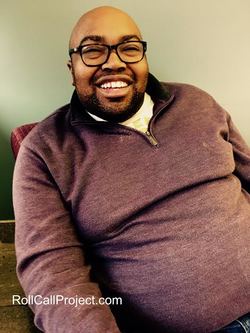 Years in Education: 7-10
Black Gay Male High School Language Arts and Social Studies Teacher Q: What do you have in common with your students? A: I am a person of color who is still discovering what it means to be woke everyday. I used to see the world colorblindly, if I'm honest. More and more often, I'm scared when I see a police officer for no reason. I'm scared for my students. I try to model what it means to be an educated young Black man. I don't always feel successful and that story resonates with students. Q: Does it matter that students and teachers have things in common? A: Students MUST have things in common with their teachers -- particularly our most vulnerable students. They need to see themselves in the people who see with them more than their parents. We must share our stories as a community, holding them with truth and grace. That is how we are going to get through life together. Evin is a 2017 Washington State Teacher Leader. Follow him on Twitter @baritoneblogger. |
ROLL CALLHumanizing the gaps separating teachers and students. Archives
October 2019
Categories
All
|
 RSS Feed